5 Dollar Bill
Security threads, design updates, and collector notes for the five dollar bill.
Who is on the 5 dollar bill?
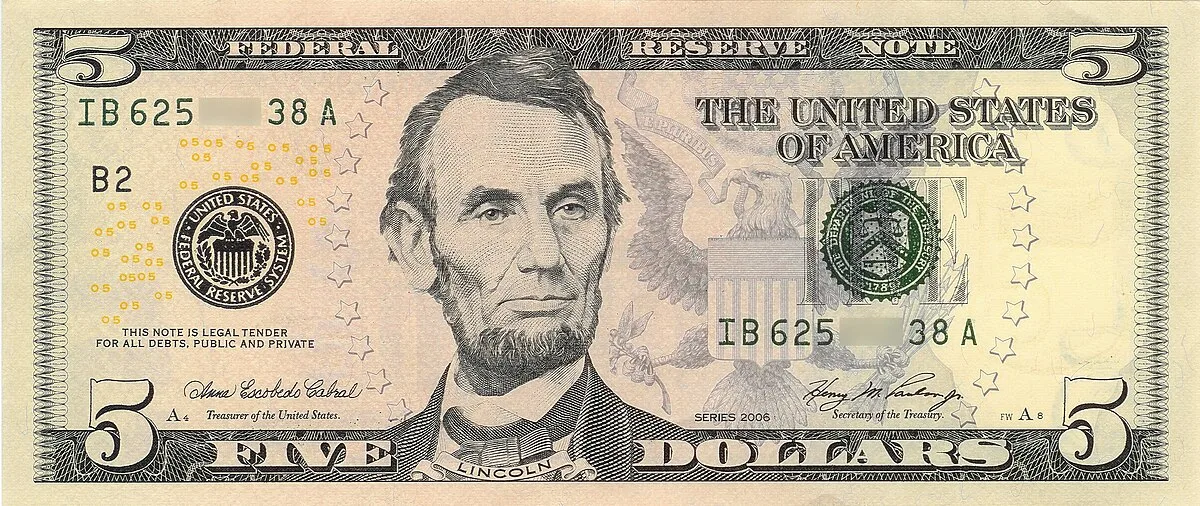
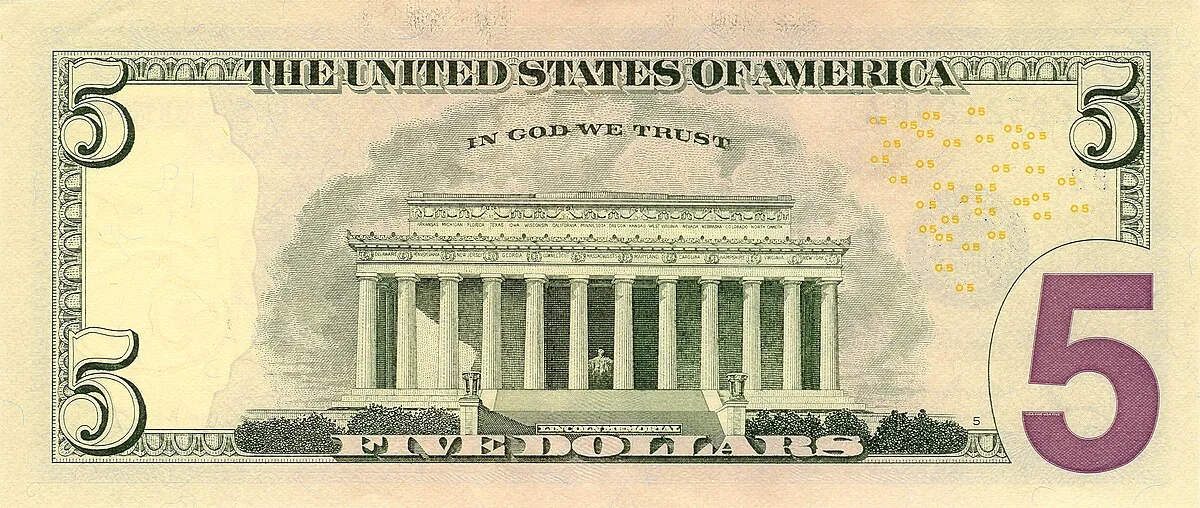
Abraham Lincoln appears on the 5 dollar bill. The Lincoln Memorial is featured on the reverse.
Design and security
Modern $5 notes include a watermark, security thread, and microprinting to deter counterfeiting.
Value and collecting notes
Most $5 bills are worth face value, but rare star notes, errors, or older series in top condition can be valuable.
A brief history of the 5 dollar bill
The 5 dollar bill has been in circulation since the 1860s, evolving through multiple note types before settling into the modern Federal Reserve format. Early $5 notes carried different portraits and ornate designs, reflecting the artistic style of nineteenth-century currency. As the United States standardized its banknotes in the early twentieth century, the $5 bill took on a more consistent layout that emphasized portrait engraving and clear denomination markers.
Abraham Lincoln became the permanent face of the five in 1914, linking the note to one of the most recognizable presidents in American history. When the nation moved to the smaller, modern size in 1928, the Lincoln portrait remained, and the Lincoln Memorial appeared on the reverse. Modern redesigns in the 2000s introduced subtle color and improved security features, making the $5 bill easier to authenticate while keeping its historic identity intact.
Design details: Lincoln and the Memorial
The obverse features Abraham Lincoln in a traditional engraved portrait. Lincoln’s presence reflects the enduring national memory of his leadership during the Civil War and his role in preserving the Union. The portrait is framed by detailed line work that is difficult to replicate, and the seals and serial numbers add immediate visual cues for denomination and authenticity.
On the reverse, the Lincoln Memorial serves as a familiar architectural symbol. In newer series, the back also includes a large purple numeral 5 and subtle background elements that make the note easier to identify at a glance. The blend of classic engraving with modern color accents gives the five a balanced look: traditional enough to feel timeless, but updated enough to support today’s security standards.
Security features to look for
Modern $5 notes include a mix of tactile and visual security elements. These features are designed to help the public verify authenticity without special tools. While the $5 does not have the blue 3D ribbon seen on the $100 bill, it still benefits from watermarking, microprinting, and other safeguards that are effective against casual counterfeiting.
- Watermarks that include a portrait and repeated “5” shapes (modern series).
- A security thread that glows under UV light.
- Microprinting near the portrait and borders.
- Raised intaglio printing that gives the note a textured feel.
- Color accents and background patterns that are hard to reproduce.
When in doubt, compare the bill with one you trust. The crisp paper feel and sharp line engraving are the quickest checks.
Circulation and everyday use
The five dollar bill is a workhorse denomination for small purchases, change-making, and cash tips. It is common enough to feel familiar, but large enough to handle many low-cost transactions. That middle-ground role keeps the $5 in steady circulation, which is why older notes tend to wear out faster than higher denominations. Businesses often stock $5 bills as a practical balance between ones and tens, and this steady demand ensures continuous printing.
Collector value and notable series
Most $5 bills are worth face value, but certain series and conditions are collectible. Older red seal United States Notes or blue seal Silver Certificates often carry premiums, especially in high grades. Star notes, low serial numbers, and printing errors can also increase value. Collectors sometimes focus on assembling a date range or a set of Federal Reserve district letters, which can be a fun way to track regional variation in serial numbers.
Condition is everything. Uncirculated notes with sharp corners and clean paper command higher prices, while worn notes typically remain close to face value. If you think you have a special five, store it carefully and consider professional grading only if the note appears rare or exceptionally preserved.
Serial numbers and star notes
Serial number patterns add another layer of collecting interest to the five dollar bill. Low numbers, repeating digits, and ladder sequences are popular among collectors and can carry a premium even on modern notes.
Star notes replace misprinted or damaged bills during production and are identified by a star symbol at the end of the serial number. They are more common on the $5 than on higher denominations, but certain runs are scarce and sought after.
Fun facts about the five
The $5 bill is often used in educational settings because it sits between the very common $1 and the more distinctive $10 or $20. It is also one of the denominations that received a visual refresh in the 2000s to improve accessibility and security. The combination of classic design with subtle color updates makes the five a great example of how US currency evolves while preserving historic imagery.
- The Lincoln Memorial has appeared on the reverse since the small-size redesign.
- The $5 note uses both traditional engraving and modern color elements.
- Older $5 notes can include red or blue seals, which collectors often seek.
5 dollar bill FAQ
Who is on the 5 dollar bill?
Abraham Lincoln is featured on the obverse, and the Lincoln Memorial is shown on the reverse.
How can I tell if a 5 dollar bill is real?
Check for the correct paper feel, raised printing, watermarks, a security thread, and microprinting. These features are built into modern $5 notes.
Are old 5 dollar bills worth more?
Some older series, especially red seal or blue seal notes in high condition, can carry a premium. Most circulated modern notes are worth face value.