20 Dollar Bill
History, design, and new dollar bill redesign news for the twenty dollar bill.
Who is on the 20 dollar bill?
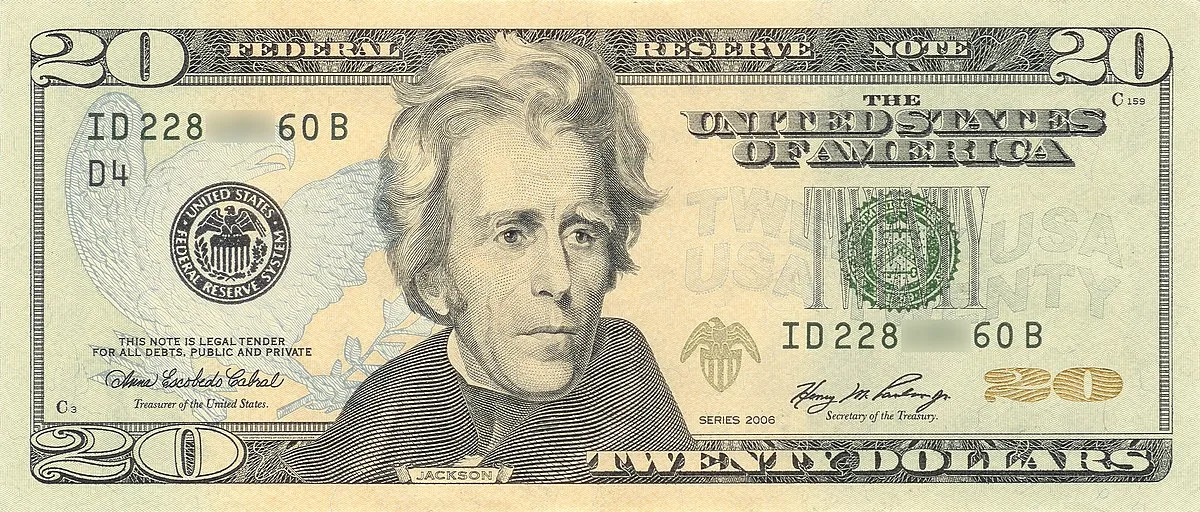
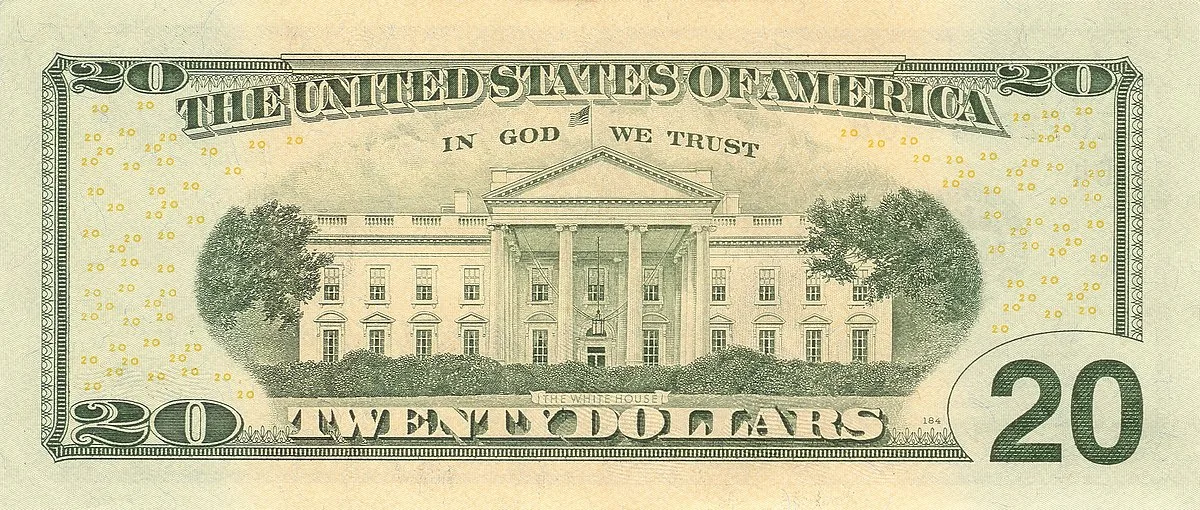
Andrew Jackson appears on the 20 dollar bill. The reverse shows the White House.
Design and security
Modern $20 notes feature color-shifting ink, watermarks, and security threads. The palette includes subtle green and peach tones for quick recognition.
New dollar bill redesign news
Redesign discussions for the $20 bill have focused on updating security features and portrait changes. Always check official Treasury and BEP updates for timelines.
A brief history of the 20 dollar bill
The 20 dollar bill has been part of US currency since the nineteenth century, appearing in several forms as paper money evolved. Early issues featured ornate designs and different portraits, reflecting the period’s engraving style. As the US moved toward standardized notes, the $20 settled into the familiar portrait-and-building format that most people recognize today.
The modern small-size $20 bill has carried Andrew Jackson’s portrait since the late 1920s, a design that has been updated for security rather than completely replaced. In the early 2000s, the denomination received a major security refresh, adding color and new anti-counterfeit elements while maintaining the traditional look. That balance between historical continuity and modern safeguards defines the twenty today.
Design details: Andrew Jackson and the White House
The obverse features Andrew Jackson, the seventh US president. His portrait is engraved with fine lines and shading that are difficult to copy, and the seals and serial numbers add clear identification. Newer series incorporate subtle color washes and background patterns that keep the design recognizable while improving security.
The reverse of the $20 bill displays the White House, an iconic symbol of the executive branch. The combination of a presidential portrait and the White House reinforces the theme of federal authority. The overall layout stays consistent across series, so once you learn the key visual cues, identifying a twenty at a glance becomes easy.
Why Andrew Jackson appears on the $20 bill
Andrew Jackson has been the face of the $20 bill since the modern small-size design began in the late 1920s. The selection reflects a period when US currency designs were being standardized across denominations, with familiar historical figures chosen for recognition and continuity.
Jackson remains on the note today, though redesign discussions surface periodically. Regardless of those debates, the current $20 retains his portrait and the White House on the reverse, making it one of the most consistent designs in the modern series.
Security features and authentication checks
Modern $20 bills include several anti-counterfeit features that can be verified by sight and touch. These checks are designed for everyday users, not just professionals. The most reliable indicators are the watermark, the security thread, and the color-shifting numeral.
- Color-shifting ink on the numeral 20 that changes when tilted.
- A watermark portrait visible when held to light.
- A security thread embedded in the paper that glows under UV light.
- Microprinting and fine-line engraving around the portrait.
- Raised printing that you can feel with your fingertips.
Always compare a suspect note with a bill you know is authentic. The combination of texture, sharp detail, and consistent color is hard to fake convincingly.
Circulation and everyday use
The $20 bill is one of the most widely used denominations in daily commerce. It is common in ATMs, retail transactions, and cash tips, and it balances convenience with purchasing power. Because it circulates heavily, the $20 is printed frequently and experiences steady turnover, which is why you often see both newer and older series in circulation at the same time.
Many people treat a $20 as the standard cash unit for everyday spending, which is why it is frequently used for grocery runs, fuel stops, and casual dining. That popularity also makes the twenty a primary target for counterfeiters, reinforcing the importance of quick security checks.
Collector value and notable series
Most modern twenties are worth face value, but collectors look for special serial numbers, star notes, and printing errors. Older large-size notes and historic issues can be more valuable, especially if they are well preserved. Condition remains a critical factor: crisp, uncirculated notes can command premiums, while worn notes generally do not.
If you are interested in collecting $20 bills, consider focusing on a series range, a Federal Reserve district set, or specific serial number patterns. These goals make the hobby more structured and rewarding while keeping the focus on history and design rather than speculation.
Star notes and well-documented error notes are especially popular because they combine rarity with a clear story of how the bill was produced.
Fun facts about the $20 bill
The twenty has a strong presence in American culture because of its role as a “go-to” cash denomination. It is large enough to feel meaningful but common enough to be practical, which is why it appears in everyday sayings and payment habits. The White House reverse also makes it one of the most instantly recognizable US bills.
- The $20 is one of the most frequently dispensed ATM denominations.
- Modern designs add color to improve quick recognition.
- The White House reverse ties the note directly to US national imagery.
20 dollar bill FAQ
Who is on the 20 dollar bill?
Andrew Jackson appears on the obverse of the $20 bill.
Is there a new 20 dollar bill redesign?
Redesign discussions focus on updating security features and, at times, potential portrait changes. Official updates come from the US Treasury and the Bureau of Engraving and Printing.
How do I check if a 20 dollar bill is real?
Verify the watermark, security thread, color-shifting ink, and raised printing. These are standard features on modern $20 notes.